Flooring selection in healthcare and education is quietly changing. With rising infection control standards, stricter indoor air quality requirements, and continued budgetary tightening, a traditional material is re-emerging in policymakers’ view—homogeneous vinyl flooring.
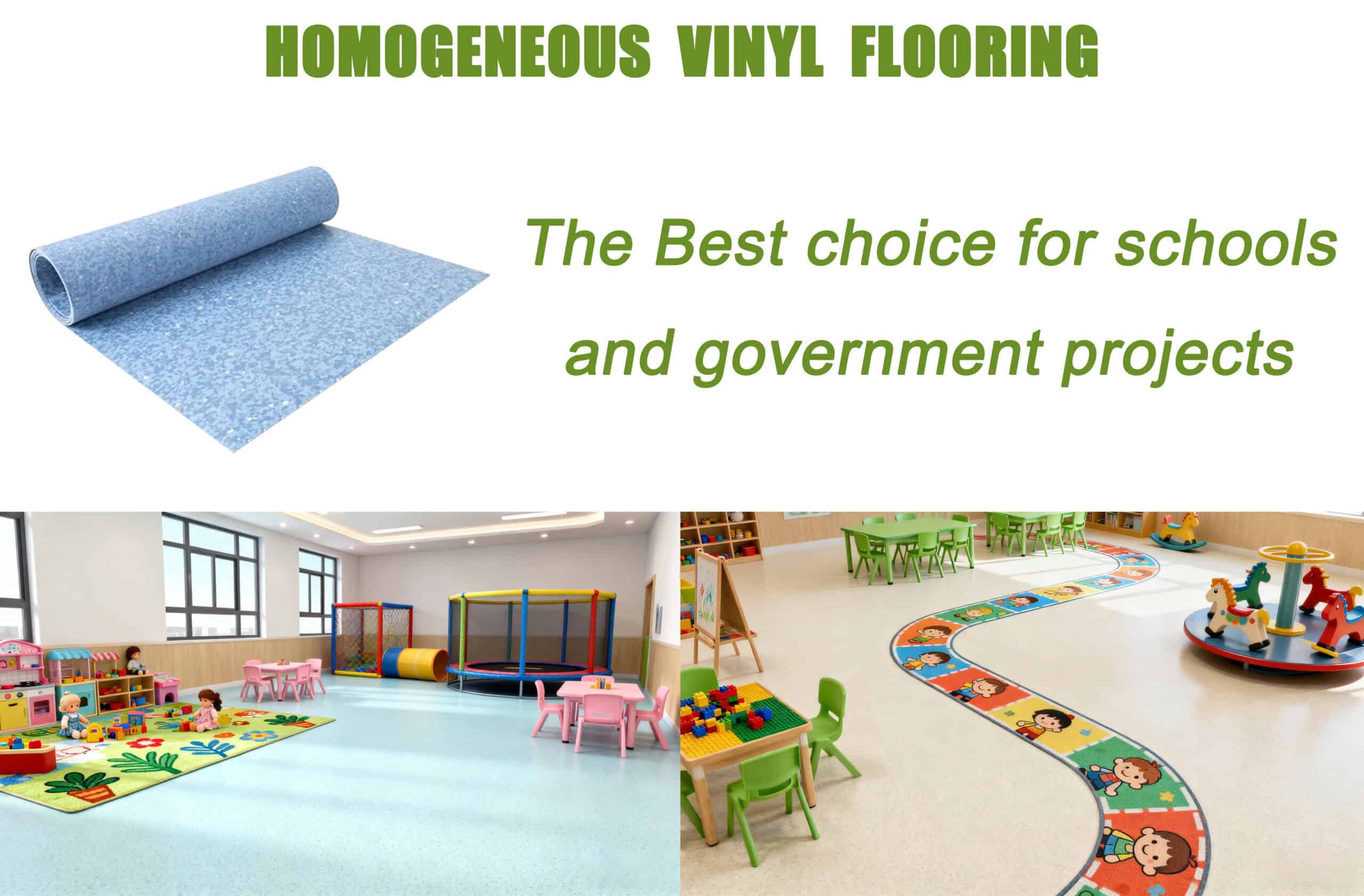
Homogeneous vinyl flooring is not new. Recent technological advances and stricter standards have turned it from an option into a top choice for hospitals and schools.
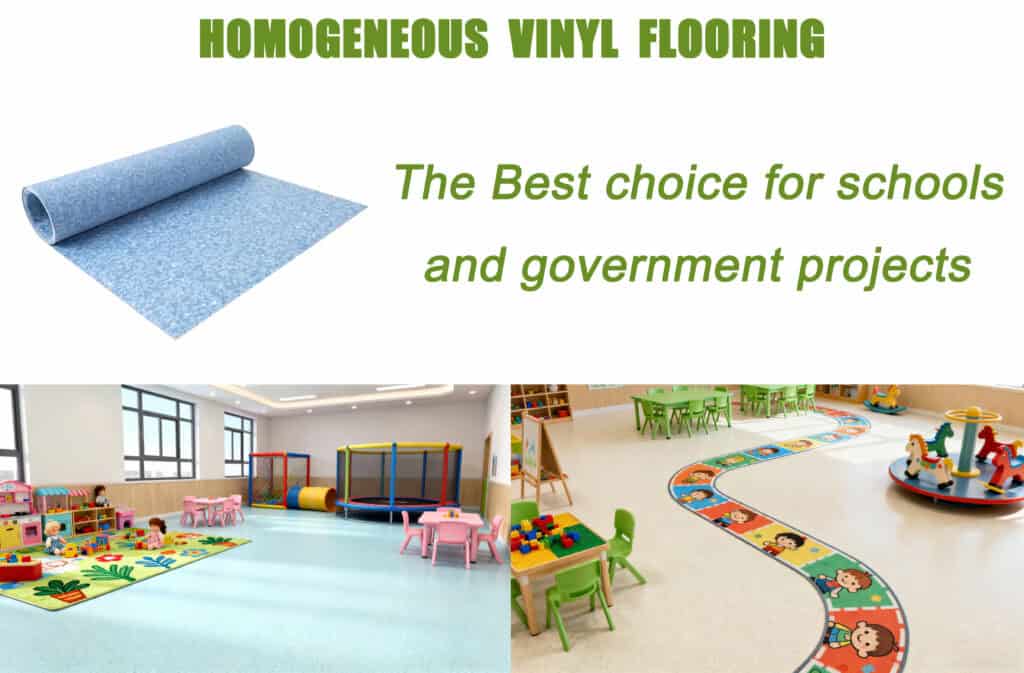
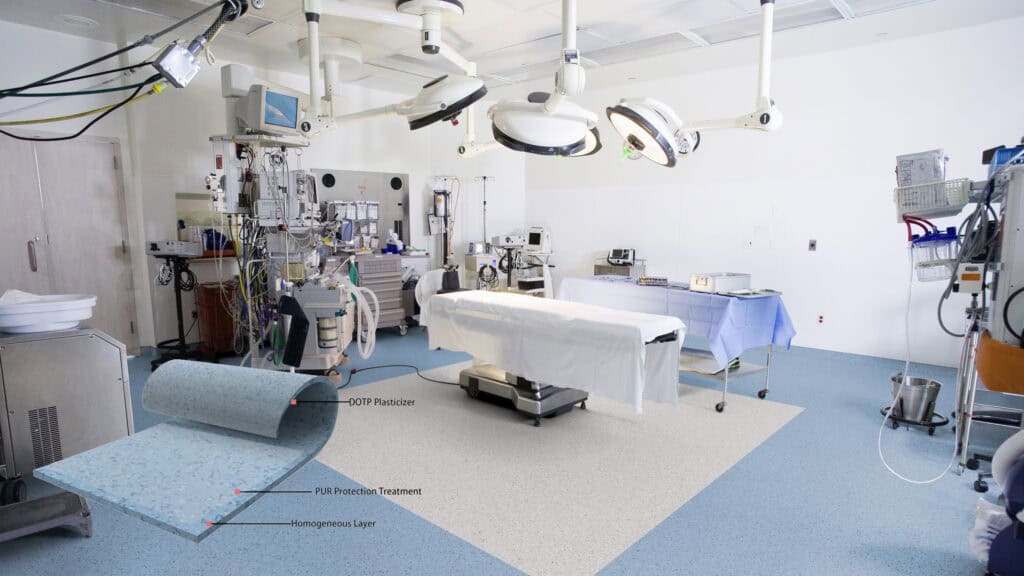
Definition: What is “Homogeneous Vinyl Flooring”?
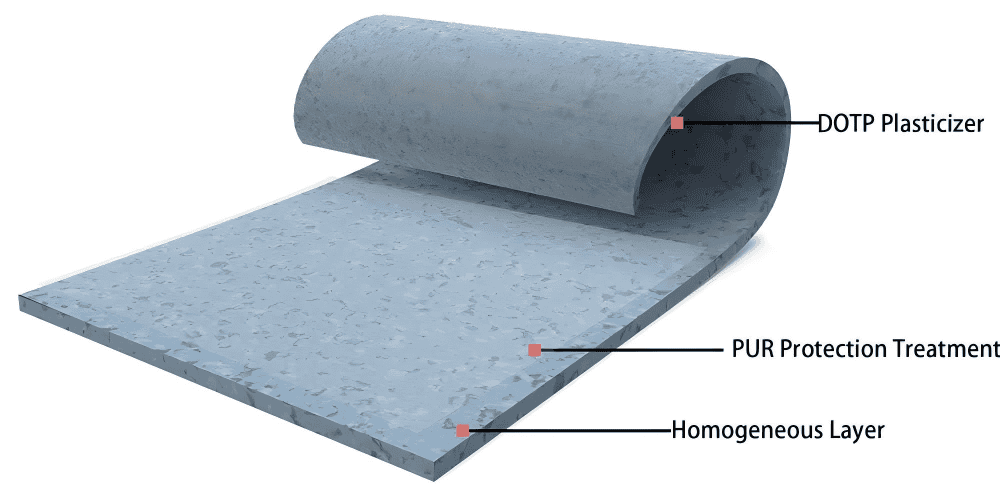
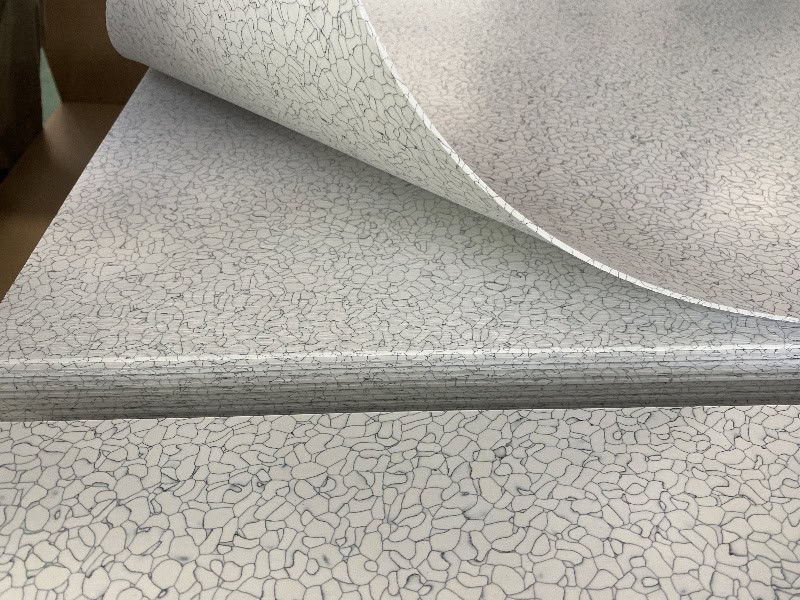
To understand its value, we must first clarify its structural characteristics. Homogeneous vinyl flooring is flooring made entirely of the same material, with the same composition and color throughout, from the surface to the base layer. According to the European standard EN ISO 10581, its composition is uniform throughout its thickness.
This is very different from heterogeneous vinyl flooring. With homogeneous vinyl, even years of wear do not change its color or pattern. The uniform structure gives it the durability needed in tough environments.
Addressing the Challenge of Extreme Durability
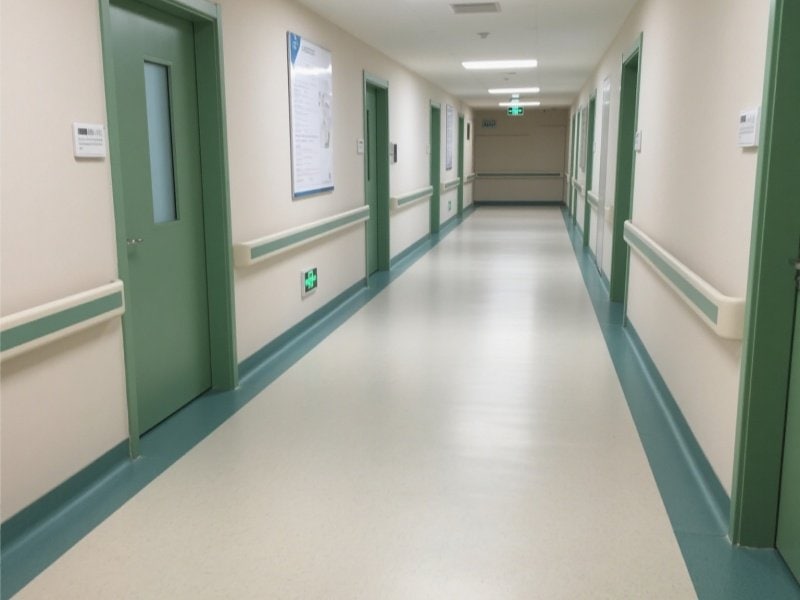
The constant movement of stretchers and beds in hospital corridors, and the frequent dragging of desks and chairs in school classrooms—these scenarios cause far more wear and tear on floors than in ordinary commercial spaces.
Homogeneous flooring is typically designed to meet usage classifications 34-43 (commercial, light industrial to heavy-duty). This means it’s not only suitable for corridors but can also withstand the load-bearing requirements of light industrial environments. Its residual indentation index is typically required to be ≤0.10mm, while actual measured values are often as low as 0.02mm. This means that even if heavy-duty hospital beds remain stationary for extended periods, the floor will not develop permanent indentations.
For budget-constrained public institutions, this robustness directly translates into lower replacement frequency and optimized total lifecycle costs.
Infection Control
Hospitals are high-risk environments for bacterial and viral contamination. Industry observations suggest that flooring is often an underestimated reservoir of microorganisms, and seamless installation is crucial to preventing moisture and pathogens from seeping into the ground.
The 100% non-porous surface of homogeneous flooring is its core defense. Due to its dense, through-structure, it doesn’t have the gaps that trap dirt and grime like ceramic tiles, nor does it leak liquids like some composite materials that can be damaged on the surface.
More importantly, modern homogeneous flooring supports heat-welded installation, achieving a truly seamless effect. Combined with a special corner-turning system, it eliminates the 90-degree dead angle between walls and floor, fundamentally eliminating breeding grounds for microorganisms. In critical areas such as operating rooms, this seamless, easy-to-clean characteristic makes it an irreplaceable choice.
Furthermore, high-quality homogeneous flooring exhibits extremely high resistance to commonly used hospital disinfectants, ensuring that continuous cleaning and disinfection will not damage the floor.
Indoor Air Quality and Material Safety
Children and patients are the most sensitive groups to the environment. The VOC emissions from newly renovated materials directly affect their respiratory health.
Top-quality homogeneous flooring undergoes rigorous testing, and its total volatile organic compound (TVOC) emissions are typically below 10 µg/m³. This figure is far below the safety limits set by most countries, ensuring high-quality indoor air.
Minimal Maintenance: From Waxing to “No-Polishing”
Rising labor costs are a common challenge for public utilities. Floors requiring frequent waxing and maintenance impose a heavy financial burden.
Thanks to advanced surface treatment technology, high-end homogeneous flooring achieves lifetime wax-free operation. Many homogeneous products can be restored to their shine with simple dry polishing, eliminating the need for chemical cleaners and allowing environmental service teams to work more efficiently.
This “low-maintenance” characteristic not only saves on material and labor costs but, more importantly, reduces site closures due to cleaning and maintenance—a crucial factor for operational efficiency, especially for 24-hour hospitals and full-time schools.
From Function to Healing Environments
Medical and educational environments are increasingly focused on creating a calming atmosphere conducive to recovery or learning. The latest color trends emphasize hues that promote well-being and tranquility, such as soft, nature-inspired colors, which help create healing spaces.
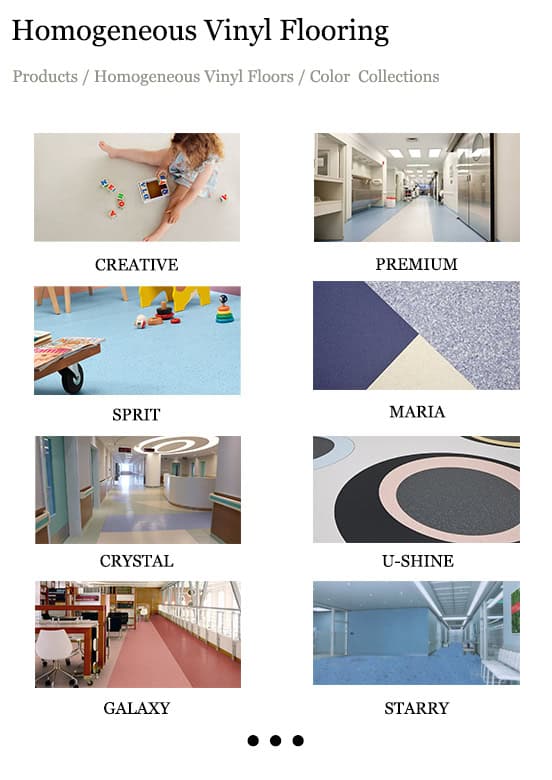
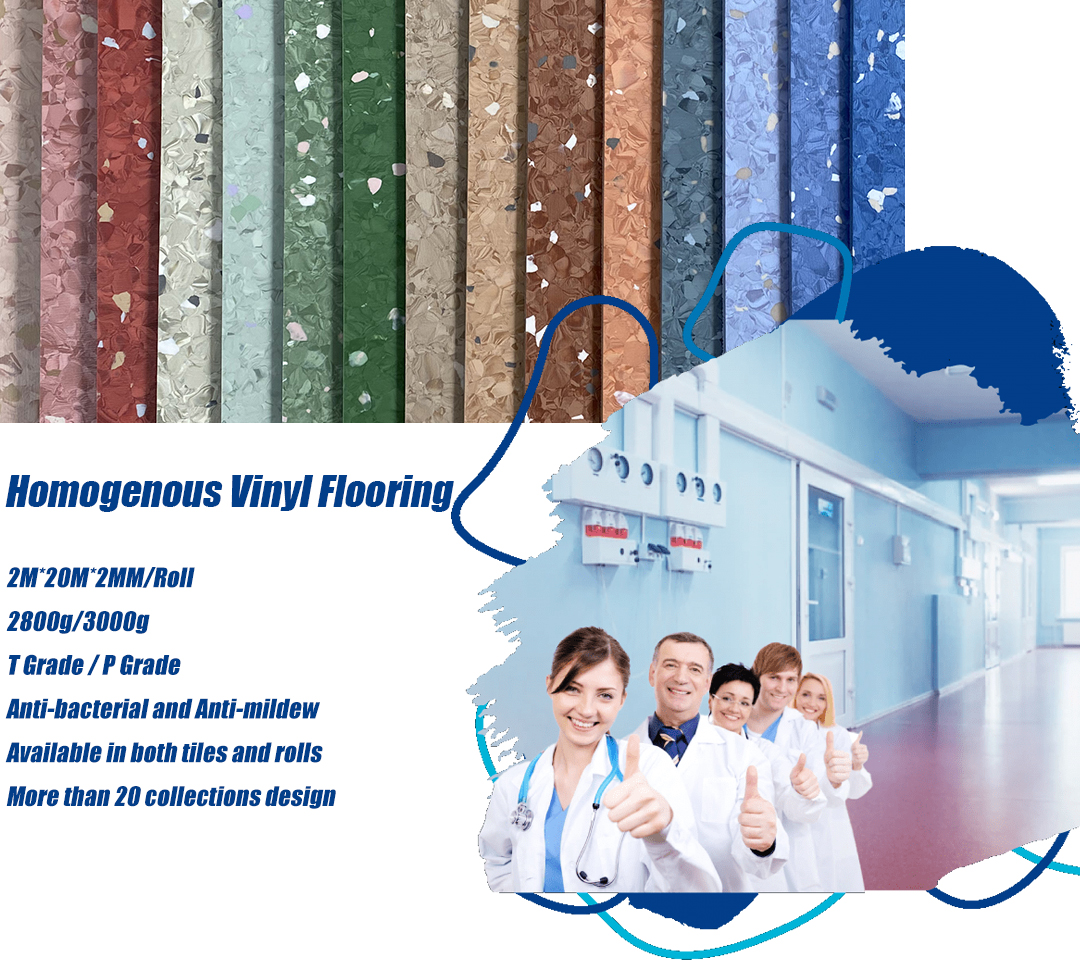
The color range of modern homogeneous flooring has expanded to dozens of hues, from soft neutrals to nature-inspired tones, allowing designers to create more human-centered spaces while maintaining functionality.
In conclusion, the reason why homogeneous PVC flooring is gradually becoming the “golden choice” for hospitals and schools stems from its precise response to core pain points:
Structurally, its uniform material throughout gives it the resilience to withstand wear and tear over time, with a lifespan of up to decades.
Hygiene-wise, a seamless installation and a non-porous surface create a physical barrier that breaks the chain of infection.
Economically, its maintenance-free nature and ultra-long lifespan address the public’s pursuit of maximum cost-effectiveness.
Humanistically, its low VOC emissions, anti-slip design, and soothing color scheme protect the most vulnerable groups.
In terms of sustainability, the inclusion of bio-based materials and recycled content aligns with the current trend of green building.
Contact us for professional recommendations & free samples!